


WHAT IS A FIBRE BED MIST ELIMINATOR
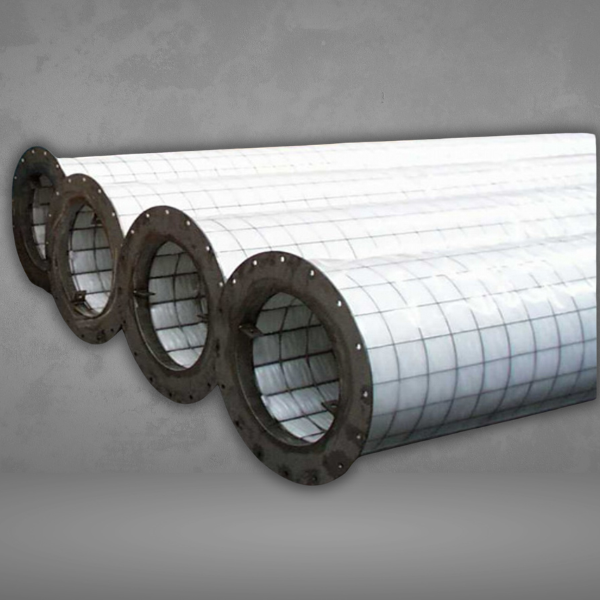
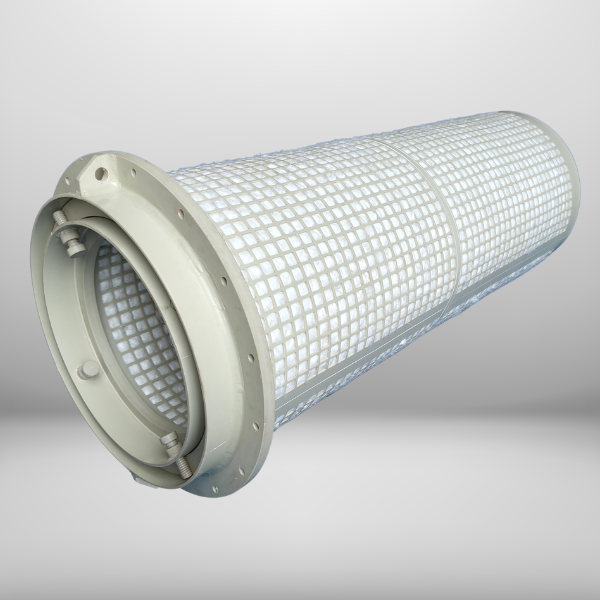
A Candle Filter Mist Eliminator is a fibre bed into which Mist laden gases enter, and out of which emerges a clean gas stream and a separated liquid stream. Fibre packing in the bed is Engineered to provide High Separation Efficiencies.
As indicated, the bed consists of special fibres, which are densely packed between two screens. Mist-laden gases enter from the side of the bed and pass in a horizontal direction through the bed. Clean gases emerge from the bed and rise to exit from the mist eliminator. Separated liquids are directed downwards and towards the outer screen and ultimately drain down the outer edge of the bed.
Our Services
-
Within a chemical process plant, it is necessary to remove acid mist and droplets from the gas stream which otherwise:-
Damage to downstream equipments
-
Increase atmospheric emissions
Lose valuable acid from the gas stream
-
We with our expertise can help you on this.
 |
 |
Suppliers of Equipments
-
With our experience we can deliver customized solutions that can meet your requirements.
Engineering & Optimisation
-
Most optimum product design for your new, existing or even aged plant.
Shutdown Delivery Service
-
Be it any situation we are well equipped for repair and replacements in any reasonable given time span.
CANDLE FILTERS FOR CHLOR ALKALI INDUSTRY ( Wet Chlorine, Dry Chlorine, Hydrogen Mist Eliminator)
-
Chlorine, Caustic and Hydrogen can be produced using electrolysis on common salts such as Sodium Chloride and Potassium Chloride. Electrolysis takes place and brine is extracted via Anode and Cathode cells on either side of the membrane.
CANDLE FILTERS FOR SULFURIC ACID INDUSTRY ( IPAT/ DT/FAT )
-
Gas stream loaded with fine mist particles will enter the bed of densely packed fibers from one side, while from the other side clean gas will emerge. The liquid separated by either Brownian or Impaction methodology will drain off by gravity.
-
The liquid separated by either Brownian or Impaction methodology will drain off by gravity.